Emotional Intimacy In Relationships
Feeling truly connected to someone is a wonderful thing. It’s that warm, fuzzy feeling. It’s knowing someone gets you.
It’s sharing your deepest thoughts. This deep bond is called emotional intimacy. It’s not just about love.
It’s about trust. It’s about being vulnerable. Many people want this.
But sometimes, it’s hard to build. This guide will help you understand it better. You’ll learn how to make it grow stronger.
Let’s dive in.
Emotional intimacy in relationships means feeling close and connected. It involves sharing thoughts, feelings, and needs openly. It grows through trust and vulnerability. This deep bond helps partners feel understood and supported. It is key for a lasting, happy relationship.
What Is Emotional Intimacy?
Emotional intimacy is the heart of a strong connection. It’s more than just liking someone. It’s about a deep, soul-level link.
Think of it as being able to share your true self. You share your joys and your fears. You share your hopes and your worries.
It means feeling safe. You feel safe to be open. You feel safe to be honest.
You feel safe to be imperfect. This happens without fear. There’s no fear of judgment.
There’s no fear of rejection. It’s a space where you can both be fully yourselves. It’s a place where understanding thrives.
This closeness doesn’t happen overnight. It’s built over time. It’s built with consistent effort.
It’s built with shared experiences. It’s built with open communication. It’s like tending a garden.
You need to water it. You need to give it sunshine. You need to care for it daily.
When you do, it blooms beautifully. It becomes strong and resilient. Emotional intimacy acts as the foundation.
It supports all other aspects of a relationship. This includes physical closeness. It also includes shared goals.
It makes everything else feel richer.
Many couples confuse physical closeness with emotional closeness. They might be physically together a lot. But they might not truly know each other.
They might not share their inner worlds. This is where emotional intimacy shines. It’s the real substance of connection.
It’s what makes a relationship last. It’s what makes it feel meaningful. It’s the comfort of truly being seen.
It’s the joy of truly being heard.
Key Traits of Emotional Intimacy
Openness: Sharing thoughts and feelings freely.
Trust: Believing your partner will be honest and kind.
Vulnerability: Showing your true self, even the weak parts.
Empathy: Understanding and sharing your partner’s feelings.
Support: Being there for each other, always.
Acceptance: Loving your partner as they are.
Why Emotional Intimacy Matters
Imagine a house without a strong foundation. It looks okay at first. But over time, cracks appear.
It can’t withstand a storm. A relationship without emotional intimacy is similar. It might seem fine on the surface.
But it lacks true strength. It lacks deep resilience. Emotional intimacy is the bedrock.
It holds everything else up. It helps you navigate tough times. It makes good times even better.
It’s not just a nice-to-have. It’s a must-have for lasting love.
When you have this deep connection, you feel secure. You know you have someone in your corner. This security is powerful.
It lets you take risks. It lets you grow as a person. You don’t have to pretend.
You don’t have to hide. This freedom is freeing. It allows both partners to thrive.
They can pursue their dreams. They can explore new ideas. They do this knowing they have a safe harbor.
This harbor is their relationship.
In relationships where emotional intimacy is weak, issues often arise. Partners might feel lonely, even when together. They might feel misunderstood.
They might feel unseen. This can lead to frustration. It can lead to resentment.
Over time, this can damage the bond. It can make the relationship feel hollow. It can make both people unhappy.
That’s why nurturing this closeness is so important. It’s an investment in happiness. It’s an investment in the future.
Consider the opposite. When partners share deeply, they feel a profound bond. They feel like a team.
They face challenges together. They celebrate successes together. This shared journey is what makes life rich.
It makes the relationship a source of strength. It’s a source of joy. It’s a source of comfort.
It’s the feeling of truly belonging. That’s the power of emotional intimacy.
Benefits of Strong Emotional Intimacy
Increased Trust: Partners rely on each other more.
Better Conflict Resolution: Easier to understand each other’s views.
Deeper Happiness: Greater overall life satisfaction.
Reduced Stress: Feeling supported helps manage life’s pressures.
Personal Growth: Encourages self-discovery and confidence.
The Difference Between Emotional Intimacy and Other Types
It’s easy to mix up different kinds of closeness. But they are distinct. Understanding the difference helps us focus.
It helps us build the right kind of connection. We often talk about physical intimacy. This is about touch.
It’s about sexual connection. It’s important in many romantic relationships. But it’s not the same as emotional closeness.
You can be physically intimate with someone. You might not feel emotionally close to them at all. It’s like having a beautiful car.
But it has no engine. It looks good, but it doesn’t go anywhere.
Then there’s intellectual intimacy. This is about sharing ideas. It’s about discussing thoughts.
It’s about engaging in stimulating conversation. You might have a friend you talk for hours with. You discuss books, movies, or big ideas.
That’s intellectual intimacy. It’s wonderful. But it doesn’t always involve sharing your deepest feelings.
It doesn’t always involve revealing your core self. It’s about the mind connecting.
Shared activities are another form of connection. This is about doing things together. It’s about hobbies.
It’s about spending time in similar ways. You might enjoy hiking with your partner. You might love watching sports together.
These shared experiences build a bond. They create memories. They show you enjoy each other’s company.
But they don’t automatically mean you share your inner selves. They don’t mean you’re vulnerable together.
Emotional intimacy is unique. It’s about the heart connection. It’s about sharing your inner landscape.
It’s about letting someone see your soul. It’s where the deepest bonds are forged. It allows for true understanding.
It allows for profound acceptance. While other types of intimacy are valuable, emotional intimacy is the core. It’s the glue that holds everything together.
It’s the warmth that makes a house a home.
Comparing Intimacy Types
Physical: Touch, closeness, sex. Focuses on the body.
Intellectual: Sharing ideas, thoughts, beliefs. Focuses on the mind.
Activity-Based: Doing things together, hobbies, shared experiences. Focuses on shared time.
Emotional: Sharing feelings, fears, hopes, vulnerabilities. Focuses on the heart and soul.
How Emotional Intimacy Develops
Building emotional intimacy is a journey. It’s not a destination. It’s a process that requires patience.
It requires consistent effort from both people. It starts with small steps. It starts with shared moments.
These moments build trust. They create a safe space. Think about your first dates.
You might share general things. You might talk about your day. You might mention your job.
This is the beginning. It’s like dipping your toe in the water.
As trust grows, you can share more. You can share personal stories. You might talk about your childhood.
You might share a funny memory. You might talk about a challenge you faced. Your partner listens.
They respond with care. This listening is key. It shows you value their words.
It shows you value their feelings. This reciprocal sharing is vital. Both partners need to open up.
Both partners need to listen well. It’s a dance. Both partners must move together.
Vulnerability is a big part of this growth. It can be scary to show your true self. You might worry about being judged.
You might fear being hurt. But when one person takes a risk, it often invites the other. If you share a worry, and your partner responds with support, you feel safer.
You’re more likely to share another worry. This creates a cycle of deepening connection. It’s a powerful way to grow closer.
Shared challenges also build intimacy. Life isn’t always smooth sailing. When you face difficulties together, you learn about each other.
You see how your partner handles stress. You see how they offer support. You see how you both work as a team.
These shared struggles, when navigated with care and communication, can strengthen your bond. They can make you feel more united than ever before. They show you that you can count on each other.
Stages of Emotional Intimacy Growth
Initial Sharing: Basic conversation, getting to know each other.
Deeper Disclosure: Sharing personal stories and experiences.
Vulnerability: Revealing fears, doubts, and insecurities.
Mutual Support: Offering and receiving comfort during tough times.
Profound Connection: Feeling deeply understood and accepted.
My Own Experience Building Emotional Intimacy
I remember a time early in my last relationship. We were both busy. Work was crazy.
We were always tired. We’d come home, eat dinner, and watch TV. We’d talk about our days in broad strokes.
“How was work?” “Fine.” “Anything new?” “Not really.” It was pleasant. But it felt… shallow. I felt a growing distance.
I missed that deep spark. I missed feeling truly connected.
One evening, I decided to try something different. Instead of asking the usual questions, I said, “I’ve been feeling a bit overwhelmed lately. I’m worried about this big project at work.
It’s making me feel really anxious.” I held my breath. Would he dismiss it? Would he tell me not to worry?
Instead, he put down his phone. He looked at me. He said, “Tell me about it.
What’s making you anxious?”
That night, we talked for hours. I shared my specific fears. I shared my doubts.
He listened without judgment. He offered support. He didn’t try to fix it right away.
He just let me express myself. Then, he shared something similar. He told me about a time he felt that way.
It was a moment of deep connection. I felt seen. I felt heard.
I felt a huge wave of relief. It was like a dam had broken. From that night on, we made it a point to share more.
We still had busy days. But we made time for real conversations. We learned to ask better questions.
We learned to listen better. It made all the difference. It brought us so much closer.
I learned that vulnerability is a gift. When you share it, you often receive understanding back.
A Moment of Realization
The Situation: Superficial conversations after busy days.
The Shift: Choosing to share a personal feeling of anxiety.
The Reaction: Partner offered empathy and shared his own experience.
The Outcome: Deeper conversation, increased trust, and a stronger bond.
Common Obstacles to Emotional Intimacy
Building emotional intimacy isn’t always easy. Many things can get in the way. One big hurdle is fear.
Fear of judgment is common. People worry their partner will think less of them. They might fear rejection.
They might think, “If they really knew me, they wouldn’t love me.” This fear keeps them guarded. It keeps them from sharing their true selves. They build walls instead of bridges.
Lack of trust is another major issue. If a partner has been hurt before, trust can be hard to rebuild. Past betrayals or broken promises can create deep scars.
Without trust, vulnerability feels impossible. It feels too risky to open up. It takes time and consistent, trustworthy actions to heal these wounds.
Sometimes, professional help is needed to mend this. It’s a delicate process.
Poor communication skills are also a barrier. If partners don’t know how to express themselves clearly, or how to listen effectively, intimacy suffers. Yelling, stonewalling, or interrupting can shut down communication.
It can create an unsafe environment. Learning to communicate with respect and empathy is crucial. It’s about talking with each other, not at each other.
Busy lifestyles can also hinder connection. When couples are constantly rushing, they don’t have time for deep talks. They might prioritize work or other activities.
This leaves little room for nurturing their bond. It’s like letting the garden go untended. The weeds grow, and the flowers fade.
Making time for each other is essential. Even small amounts of focused time can help.
Finally, different attachment styles can play a role. Some people are anxious in relationships. They crave closeness.
Others might be avoidant. They may feel uncomfortable with too much closeness. Understanding these styles can help partners navigate their needs better.
It can help them find a balance. It allows for compromise and understanding. It’s about meeting in the middle.
Barriers to Intimacy
Fear: Of judgment, rejection, or being hurt.
Lack of Trust: Due to past experiences or ongoing issues.
Poor Communication: Ineffective listening or unclear expression.
Busy Schedules: Not enough quality time together.
Unmet Needs: When one partner’s needs are consistently ignored.
Past Trauma: Unresolved emotional pain affecting current interactions.
How to Build and Deepen Emotional Intimacy
So, how can you actively build this vital connection? It starts with intention. You have to want it.
You have to be willing to put in the work. The first step is open and honest communication. This means talking about your feelings.
It means using “I” statements. For example, say “I feel hurt when.” instead of “You always.”. This reduces blame.
It makes it easier for your partner to hear you.
Active listening is just as important as talking. When your partner speaks, truly listen. Put away distractions.
Make eye contact. Nod to show you’re engaged. Try to understand their perspective.
Don’t just wait for your turn to speak. Ask clarifying questions. This shows you care about what they’re saying.
It shows you value their thoughts. It validates their feelings.
Vulnerability is key. Take small risks. Share something personal.
It could be a worry, a hope, or a past experience. Observe your partner’s reaction. If they respond with empathy and support, you’ll feel safer.
This encourages more sharing. Over time, these brave moments build deep trust. Remember, vulnerability isn’t weakness.
It’s strength. It’s the courage to be real.
Spend quality time together. This doesn’t mean just being in the same room. It means focused, uninterrupted time.
Put away phones. Turn off the TV. Have meaningful conversations.
Go for walks. Cook together. Share a quiet cup of coffee.
These moments create opportunities for connection. They allow you to reconnect on a deeper level. Even 15-20 minutes of focused time can make a big difference.
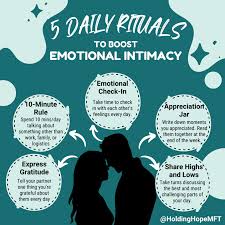
Show appreciation and affection. Regularly tell your partner what you appreciate about them. Acknowledge their efforts.
Express your love and care. Small gestures matter. A hug, a thoughtful note, a helping hand.
These things reinforce the bond. They remind you both why you are together. They show you are seen and valued.
Encourage your partner’s independence and growth. True intimacy doesn’t mean merging into one person. It means supporting each other’s individual lives.
Encourage hobbies, friendships, and personal goals. When partners feel supported in their individual pursuits, they bring that strength back to the relationship. This creates a healthier, more balanced dynamic.
It shows respect for each other as individuals.
Consider seeking professional help. If you’re struggling to connect, a therapist can provide tools. They can guide you through difficult conversations.
They can help you understand underlying issues. This is a sign of strength, not failure. It shows you are committed to your relationship.
Couples counseling can provide a safe space. It can offer new perspectives. It can facilitate healing and growth.
It’s a powerful way to build bridges.
Actionable Steps for Deeper Connection
Practice Active Listening: Focus fully on your partner when they speak.
Share Feelings: Use “I feel” statements to express emotions clearly.
Be Vulnerable: Share personal thoughts and fears cautiously.
Schedule Quality Time: Dedicate time for uninterrupted connection.
Express Appreciation: Regularly tell your partner what you value.
Support Individuality: Encourage personal growth and outside interests.
Consider Counseling: Seek professional help if needed.
Real-World Scenarios
Let’s look at some common situations. Imagine a couple, Sarah and Tom. Sarah had a terrible day at work.
Her boss was critical. She felt undervalued. When Tom asked how her day was, she said, “Fine.” She didn’t want to burden him.
Tom, meanwhile, had exciting news. He got a promotion. He wanted to share his joy.
But Sarah seemed distant. He felt a pang of disappointment. They missed a chance for connection.
Sarah’s fear of burdening Tom prevented her from sharing her pain. Tom’s news landed flat because Sarah wasn’t open.
In contrast, consider Maria and Javier. Maria had a tough day. She felt a wave of sadness.
She told Javier, “I’m feeling really down today. I feel like I messed up that client meeting.” Javier listened. He held her hand.
He said, “I’m so sorry you feel that way. It sounds really hard. Can you tell me more about it?” He didn’t offer solutions.
He just offered support. Later, Javier shared his good news. Maria, feeling supported, was able to share his joy.
This happened because they had built a foundation of trust. They knew they could share their highs and lows.
Another scenario involves shared hobbies. A couple might both love gardening. They spend hours in the garden together.
They talk about plants. They work side-by-side. This creates a pleasant shared experience.
It’s a form of connection. However, if they never talk about their deeper feelings or worries while gardening, it remains an activity-based connection. It doesn’t automatically build emotional intimacy.
True intimacy requires going beyond the shared task. It means talking about how the gardening makes you feel. It means sharing why it’s important to you.
Think about finances. Money is a huge stressor for many couples. If partners can’t discuss their financial fears openly, it creates a wall.
One partner might be worried about debt. The other might be spending freely. If they can’t talk about it with honesty and empathy, resentment builds.
This is a prime area where emotional intimacy is crucial. Being able to discuss sensitive topics like money, without judgment, is vital for a strong partnership. It requires courage and trust.
Scenarios in Action
Scenario 1 (Missed Connection): Sarah feels down, Tom has good news. Sarah’s fear and Tom’s unawareness create a gap.
Scenario 2 (Deep Connection): Maria shares her sadness. Javier offers empathy and support, allowing her to later share his joy.
Scenario 3 (Activity vs. Intimacy): Gardening together is nice, but not emotional intimacy if feelings aren’t shared.
Scenario 4 (Financial Strain): Lack of open financial talk leads to resentment and division.
When to Worry: Signs of Low Emotional Intimacy
While building intimacy takes time, some signs suggest it’s dangerously low. One common sign is feeling lonely within the relationship. You might feel like you’re living separate lives.
You might not share personal details. You might feel like a roommate, not a partner. This lack of deep connection can be disheartening.
It can leave you feeling unseen and unheard. This loneliness can affect your overall well-being.
Frequent arguments about surface issues can also be a red flag. When couples can’t talk about deeper problems, they might nitpick. They might argue about chores or minor inconveniences.
These arguments are often a sign of deeper, unexpressed feelings. They are a way of dealing with frustration. They are a way of trying to get attention.
But they don’t solve the root problem. They can create a cycle of conflict.
A lack of emotional support is another concern. When you’re going through a tough time, do you feel you can turn to your partner? Do they offer comfort?
Or do they seem distant or uninterested? If you can’t rely on your partner for emotional support, the bond weakens. You might start to withdraw.
You might stop sharing your struggles. This erodes trust and closeness.
Another indicator is keeping secrets or withholding information. While everyone needs some personal space, a pattern of withholding important feelings or experiences can be damaging. If you feel you can’t be honest with your partner about significant aspects of your life, intimacy is likely suffering.
This can stem from fear or a lack of trust. It creates a divide.
Finally, a lack of physical affection can sometimes signal emotional distance. While not always the case, a significant drop in cuddles, holding hands, or intimacy can be a symptom. It might mean one or both partners are feeling disconnected.
They may not feel safe enough to be physically close. This emotional disconnect often precedes physical disconnection.
If you recognize these signs, it doesn’t mean the relationship is doomed. It means it’s time to focus on rebuilding. It’s time to actively work on emotional intimacy.
Small, consistent efforts can make a difference. It’s about recognizing the issue and taking steps towards connection.
Warning Signs of Low Emotional Intimacy
Feeling Lonely: Even when physically together.
Constant Arguments: Over trivial matters, masking deeper issues.
Lack of Support: Partner is unavailable during tough times.
Secrecy: Withholding important feelings or information.
Reduced Affection: Less physical touch and emotional warmth.
Avoidance: Both partners avoid deep or difficult conversations.
When It’s Normal
It’s important to remember that emotional intimacy fluctuates. It’s not always at peak levels. There will be times when life gets hectic.
Work demands might increase. Family issues might arise. During these periods, your connection might feel less intense.
You might spend less time talking deeply. This is usually normal. It doesn’t mean the intimacy is gone.
It just means the focus has temporarily shifted.
Sometimes, partners need space. One person might be going through a personal struggle. They might need time to process things alone.
This doesn’t mean they don’t love you. It just means they need self-care. As long as there’s a foundation of trust, they will likely come back to you when they’re ready.
Respecting their need for space can actually strengthen the bond in the long run.
Also, different personalities express intimacy differently. Some people are naturally more talkative and open. Others are more reserved.
If your partner is less expressive, it doesn’t automatically mean they lack deep feelings for you. They might show their love through actions, like helping you with tasks or being a steady presence. It’s about understanding their unique way of connecting.
The key is whether there’s a baseline of trust and respect. If you know you can talk about difficult things when needed, even if you don’t do it every day, that’s a good sign. If you can revisit closeness after a busy period, that’s also positive.
It’s about the overall pattern, not every single moment.
Signs of Normal Fluctuations
Temporary Busyness: Life events temporarily reduce deep talk time.
Need for Space: One partner requires personal time to process.
Different Expression Styles: Love shown through actions, not just words.
Resilience: Ability to reconnect after periods of less intensity.
Underlying Trust: Confidence that deep conversations are possible when needed.
Quick Tips for Fostering Connection
Want to boost emotional intimacy today? Here are a few simple ideas. Make eye contact when your partner speaks.
Really look at them. Show them they have your full attention. This small act speaks volumes.
It says, “I see you. You matter.”
Ask open-ended questions. Instead of “Did you have a good day?” try “What was the most interesting thing that happened today?” or “What made you smile today?” These questions invite more detailed answers. They open the door for deeper sharing.
They encourage more than a one-word reply.
Offer a genuine compliment. Notice something you appreciate about your partner. It could be their kindness, their effort, or even something they’re wearing.
Say it out loud. A simple “I really appreciate you doing that” can make a big impact. It boosts morale and strengthens the bond.
Plan a regular “check-in” time. It doesn’t have to be long. Maybe 10 minutes before bed.
Or during a weekend coffee. Use this time to share how you’re truly feeling. It’s a dedicated space for connection.
It shows commitment to the relationship.
Practice empathy. When your partner is upset, try to put yourself in their shoes. Say, “I can understand why you’d feel that way.” This validates their feelings.
It shows you’re trying to connect with their experience. It builds trust and understanding.
Share a memory. Talk about a time you felt especially close. Or a funny moment you shared.
Reliving positive experiences together reinforces your bond. It reminds you of the good times. It strengthens your shared history.
Simple Connection Boosters
Eye Contact: Show you are truly present.
Open Questions: Encourage deeper conversation.
Genuine Compliments: Express appreciation clearly.
Scheduled Check-ins: Dedicate time for sharing feelings.
Empathy Practice: Try to understand your partner’s perspective.
Memory Sharing: Recall positive shared moments.
Frequently Asked Questions about Emotional Intimacy
What is the quickest way to build emotional intimacy?
There’s no “quickest” way, as true intimacy takes time and consistent effort. However, actively practicing open communication and demonstrating vulnerability are key. Start by sharing a genuine feeling or a small personal story and see how your partner responds.
Building trust and safety is a gradual process.
Can emotional intimacy exist without physical intimacy?
Yes, emotional intimacy can exist without physical intimacy. Some friendships have very deep emotional connections. In romantic relationships, both are important, but one can be present without the other.
However, for most romantic partners, a strong emotional bond often enhances and is enhanced by physical closeness.
How do I know if my partner is emotionally intimate with me?
Your partner shows emotional intimacy by sharing their thoughts, feelings, fears, and dreams with you. They involve you in their decision-making. They seek your advice and support.
They are open to discussing difficult topics. You feel like you truly understand each other on a deep level.
Is it normal for emotional intimacy to fade over time?
Emotional intimacy can ebb and flow. Life events, stress, and lack of effort can cause it to feel less intense. However, if it fades significantly and stays that way, it’s a sign that the relationship needs attention.
It doesn’t have to fade permanently if both partners are willing to work on it.
What’s the difference between emotional intimacy and just being friends?
While friendships can have emotional intimacy, romantic relationships often involve a deeper level of shared life, commitment, and often, physical intimacy. In a romantic partnership, emotional intimacy usually means sharing your entire self—your past, present, and future hopes—with the expectation of a lifelong bond.
Can I build emotional intimacy in a long-distance relationship?
Yes, absolutely. Long-distance relationships require even more intentional effort. Regular video calls, frequent texts sharing daily details, and scheduled “date nights” are crucial.
Open communication about feelings and being vulnerable despite the distance are key to maintaining a strong emotional connection.
What if my partner doesn’t want to talk about their feelings?
This can be challenging. It’s important to express your own need for connection using “I” statements. You can ask them if there’s a different way they prefer to communicate.
Sometimes, suggesting professional counseling can help create a safe space for them to open up. However, you cannot force someone to share if they are not ready or willing.
Conclusion
Building strong emotional intimacy is a rewarding journey. It’s the secret sauce for lasting relationships. It requires honest communication.
It needs genuine vulnerability. It thrives on trust. It’s about truly seeing and accepting each other.
It’s not always easy. But the rewards are immense. You gain a deeper connection.
You find unwavering support. You experience profound happiness. Start today.
Take a small step. Share a feeling. Listen with your heart.
Your bond will thank you for it.