Signs Of Trust Issues
Understanding the subtle signs of trust issues is key to building healthier relationships. These indicators can appear in many forms, affecting both personal connections and professional interactions. Recognizing them early allows for proactive steps toward healing and stronger bonds.
This information aims to provide clarity on these often-overlooked signals.
What Are Signs of Trust Issues?
Trust issues mean someone finds it hard to believe or rely on others. This can make relationships feel shaky. It’s like walking on thin ice.
You worry it might break at any moment. These issues can stem from many places. Past hurt is a big one.
So is how someone was raised. Sometimes, it’s just a person’s natural way of seeing the world.
When trust is weak, people might act in certain ways. They might check up on you a lot. Or they might seem suspicious even when you’ve done nothing wrong.
They might hold back their own feelings. It’s like they’re building a wall. This is to protect themselves from getting hurt again.
It’s a defense mechanism. It can be hard for both people.
My Own Moment of Doubt
I remember a time when a close friend started acting strange. We had always been open with each other. But suddenly, she became quiet.
She’d give short answers to my questions. If I asked about her day, she’d just say “fine.” It felt off. I tried to ask her what was wrong.
She’d just wave it away.
One evening, I mentioned a new project I was excited about. I had told her about it before. This time, her reaction was cold.
She said something like, “Are you sure you can handle that?” It stung. It wasn’t like her. I started to wonder if she was jealous.
Or maybe she didn’t think I was capable. That doubt lingered. It made me pull back a little too.
It’s funny how one small shift can make you question everything.
Signs of Trust Issues: A Quick Look
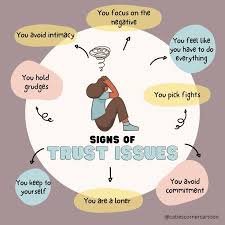
Checking behaviors: Constantly asking where you are or who you’re with.
Suspicion: Assuming the worst even with no proof.
Guardedness: Not sharing personal thoughts or feelings.
Testing: Setting traps to see if you’ll lie.
Jealousy: Unreasonable envy of your other relationships.
How Do Trust Issues Show Up?
Trust issues can appear in many different ways. It’s not always obvious. Think of it like a puzzle.
You see a few pieces first. Then more pieces start to appear. These pieces form a bigger picture.
This picture shows how someone struggles with trust.
One common sign is doubt. A person might always question your words. They might ask the same question many times.
They want to make sure your story doesn’t change. It’s like they are looking for a slip-up. Even if you are being honest, they might not believe you.
This can be exhausting for the person being questioned.
Another sign is being overly suspicious. Someone might think you are hiding things. They might assume you have bad intentions.
For example, if you are late, they might think you were with someone else. They might not consider traffic or other normal delays. Their mind jumps to the worst-case scenario.
Emotional distance is also a big signal. People with trust issues might keep their feelings locked up. They don’t want to seem vulnerable.
Sharing deep thoughts or fears feels dangerous. They might act tough or indifferent. This makes it hard to feel close to them.
It’s like trying to hug a porcupine. You want to, but it’s difficult.
The Root of Suspicion
Past Betrayals: When someone breaks your trust, it’s hard to forget. This can make you wary of new people.
Childhood Experiences: Growing up with unreliable caregivers can teach you not to trust.
Insecurity: Feeling not good enough can make you think others will leave or betray you.
Anxiety: Constant worry can lead to imagining bad things happening in relationships.
Testing behavior is another thing to watch for. This is when someone might set up little tests. They want to see if you will pass or fail.
For instance, they might “accidentally” leave their phone around. They want to see if you will look through it. Or they might say something controversial to gauge your reaction.
It’s their way of seeking proof that you are trustworthy.
Unreasonable jealousy also plays a part. If someone gets upset about you talking to friends or family, that’s a sign. They might feel threatened by other relationships.
They worry you will choose someone else over them. This shows a deep lack of faith in your commitment.
Sometimes, people with trust issues avoid commitment altogether. They might string people along. Or they might end things quickly.
This is to avoid the pain of being left or hurt. It’s a way to control the situation. They want to be the one who walks away first.
When You Can’t Shake That Gut Feeling
There was this one guy I started seeing. He seemed nice enough at first. But after a few dates, I felt this weird unease.
He was a little too eager. He’d text me constantly. He’d want to know my plans for the weekend way in advance.
If I didn’t reply right away, he’d text again.
One night, he asked me where I was going after dinner. I said I was meeting up with a friend. He pressed me for details.
Who was the friend? What would we do? I started to feel choked.
It wasn’t that I didn’t trust him. It was that he didn’t trust me. He seemed to think I was hiding something.
His need for constant updates made me feel like a prisoner. It wasn’t fun. It felt like work to reassure him.
I realized then that this was a sign for me. It was a sign of his own trust problems, not mine. It was a red flag that made me question if a relationship could even grow.
Common Trust Issues in Action
| Behavior | What It Looks Like | Underlying Fear |
| Constant Questioning | Asking the same things over and over. | Fear of being lied to. |
| Checking Devices | Looking through phones or computers. | Fear of hidden secrets. |
| Emotional Walls | Not opening up about feelings. | Fear of vulnerability. |
| Pushing People Away | Ending relationships early. | Fear of abandonment. |
Real-World Scenarios: Where Trust Issues Surface
Trust issues don’t just happen in romantic relationships. They can pop up anywhere. Think about your friends.
Do some always seem a bit distant? Do they keep secrets? That could be trust issues at play.
It’s hard to build deep friendships when someone can’t open up.
Workplaces can also show these signs. If a boss constantly micromanages. If they never give employees freedom.
They might not trust their team to do the job right. This can make employees feel undervalued. It can also lead to a bad work environment.
People might start to doubt their own abilities.
Even family dynamics can be affected. If a parent always checks up on their adult child. If they question their choices constantly.
This can signal a lack of trust. It can make the child feel like they can never be independent. It’s a tough cycle to break.
The environment where trust issues grow is often one of fear. It’s fear of being hurt. It’s fear of being exposed.
It’s fear of being alone. These fears can make people act in ways that push others away. They might not even realize they are doing it.
They just feel a strong need to protect themselves.
Trust in Different Settings
Friendships: Hesitation to share personal details. Always feeling on guard.
Family: Parents overly controlling adult children. Siblings not confiding in each other.
Work: Managers who micromanage. Colleagues who hoard information.
Online: Being overly cautious with personal information. Distrusting online reviews or advice.
What Does This Mean for You?
When you see these signs, it’s important to know when it’s normal. A little bit of caution is okay. Everyone gets cautious sometimes.
But when the signs are constant and strong, it might be a problem. It’s about the pattern of behavior.
If you are the one showing these signs, it’s a signal to look inward. What is making you feel this way? Are past hurts still affecting you?
Are you afraid of being vulnerable? It’s not a sign of weakness to have these feelings. It’s a sign that you need to heal.
Talking to a therapist can really help. They can guide you through understanding these feelings.
If you are on the receiving end of these behaviors, it can be hard. You might feel frustrated. You might feel unloved.
It’s important to remember that it’s likely not about you. It’s about the other person’s past experiences. You can’t fix their trust issues for them.
But you can set boundaries. You can decide how much you are willing to give.
Simple checks can be useful. Are you asking for too much too soon? Or is the other person demanding constant reassurance?
Are they making accusations without cause? These questions can help you see the situation more clearly. It helps you understand what is healthy and what is not.
When to Pay Attention
Constant doubt: They rarely accept your word without proof.
Controlling behavior: They try to dictate your actions or who you see.
Emotional blackmail: They use guilt or threats to keep you close.
Lack of growth: The relationship isn’t moving forward because of constant suspicion.
Quick Tips for Building Trust
Building trust takes time and effort. It’s not an overnight fix. But there are things you can do.
If you are trying to build trust with someone. Or if you want to be more trusting yourself.
Be consistent. Do what you say you will do. If you promise to call, make the call.
If you say you’ll be somewhere, show up. Small actions build up over time. They show reliability.
This is the foundation of trust. It’s about proving yourself to be dependable.
Be honest. Even when it’s hard. Little white lies can grow.
They can make people wonder what else you might be hiding. If you make a mistake, own it. Admitting fault shows strength.
It shows you value truth. This is crucial for building strong bonds.
Be open. Share your thoughts and feelings. Let people get to know the real you.
This doesn’t mean oversharing. It means being willing to be a little vulnerable. When you let your guard down, it invites others to do the same.
It creates a deeper connection.
Listen. Really listen. When someone is talking, pay attention.
Don’t just wait for your turn to speak. Try to understand their perspective. Show that you care about what they are saying.
This shows respect. It makes people feel heard and valued. This is a huge part of building trust.
Respect boundaries. Everyone has limits. Know what yours are.
And respect the limits of others. Don’t push people to do things they are uncomfortable with. This shows you value their feelings and their space.
It creates a safe environment for trust to grow.
Frequently Asked Questions
Why do I keep checking my partner’s phone?
This behavior often comes from a deep-seated fear of being betrayed or lied to. Past experiences where trust was broken can lead to this habit. It’s a way to seek reassurance, even if it’s unhealthy.
It’s important to explore the root of this fear, possibly with professional help, to build healthier coping mechanisms.
How can I help someone who doesn’t trust me?
Patience and consistency are key. Be reliable. Do what you say you will do.
Be honest, even about small things. Show that you are not a threat by respecting their boundaries. Avoid getting defensive when they express doubt.
Sometimes, just being a stable, trustworthy presence over a long period is the best approach.
Is it normal to be suspicious of new people?
A little bit of caution when meeting new people is normal and smart. It helps keep you safe. However, if you find yourself immediately distrusting almost everyone, it might be a sign of deeper trust issues.
This can limit your ability to form new connections and friendships.
What’s the difference between healthy skepticism and trust issues?
Healthy skepticism means questioning things when there’s a reason to. You look for evidence. Trust issues mean you distrust without good reason.
You assume the worst is likely. Skepticism is based on logic and evidence. Trust issues are often based on fear and past hurts.
Can I ever fully trust someone with trust issues?
Yes, it is possible. It requires a lot of patience, understanding, and consistent effort from both people. The person with trust issues needs to be willing to work on their fears and insecurities, often with professional support.
You can be a supportive partner, but you cannot force them to trust you.
What if my trust issues are making me lonely?
Feeling lonely because of trust issues is a common struggle. It’s a sign that your protective walls are preventing connection. Taking small steps to open up, even in low-risk situations, can help.
Consider journaling your feelings or talking to a trusted, understanding friend or a therapist about what you’re experiencing.
Final Thoughts
Recognizing signs of trust issues is a vital skill. It helps you navigate relationships better. Whether you see them in yourself or others, understanding is the first step.
It’s a journey toward more secure connections. Be patient with yourself and others.